
By Greg Castillo, CHC Affiliate
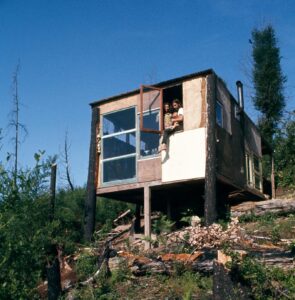
The lazy hippie, one of the most durable counterculture stereotypes, misrepresents the movement’s energetic subversion of the modern construct of work.
Industrial societies valorize work as an income distribution mechanism, a threshold of adulthood, a yardstick of status, and a foundation of individual identity. Counterculture ideology rejected such instrumental uses of labor as not only coercive but also unnecessary, given the excess productive capacity of an economy predicated upon planned obsolescence and competitive consumption. This essay examines how hippies, in their guise as outlaw builders, radically redefined work. Mobilizing two inherited middle-class legacies—the ideal of work as a vehicle of self-fulfillment and postwar enthusiasm for do-it-yourself pastimes and guidebooks—counterculture builders violated the cultural conventions and legal protocols of construction labor. Hippies redefined the practice of self-building as a transformative experience open to anyone: the unskilled, the cash-strapped, women and children, lesbians and gay men. Outlaw builders devised a work culture that fostered collective identity and individual self-confidence in the process of constructing their back-to-the-land shelters across a rural archipelago of “liberated territories.”